
7 Tips for Choosing a Hot Melt Coating Machine

Selecting a Hot Melt Coating Machine is a production decision, not merely an equipment purchase. The right system influences coating uniformity, adhesive usage, line speed, energy consumption, and product reliability. A machine may look impressive during a short demonstration, yet perform differently after weeks of continuous operation.

Industry data supports careful evaluation. Grand View Research identifies packaging, construction, automotive, and hygiene products as major application areas for hot melt adhesives. Its market analysis also highlights demand for faster processing and more efficient material use. Smithers’ packaging studies point to e-commerce growth and sustainability pressures as important drivers of converting technology. These trends make precision and flexibility increasingly valuable. They also make careless purchasing expensive.

Real production details matter. Consider a 1,600-millimeter web, a narrow coating window, and adhesive temperatures above 150°C. Small temperature fluctuations can create streaks, bubbles, or weak bonding. PMMI reports on packaging machinery similarly emphasize automation, uptime, operator safety, and service support. Those factors should guide the conversation with every supplier.

The best choice is rarely the machine with the longest feature list. It is the system that matches your adhesive, substrate, coating weight, speed, and maintenance capability. No machine is perfect. Even experienced buyers can underestimate cleaning time or future product changes. The following seven tips provide a practical framework for comparing specifications, testing performance, checking supplier expertise, and avoiding costly assumptions before installation.
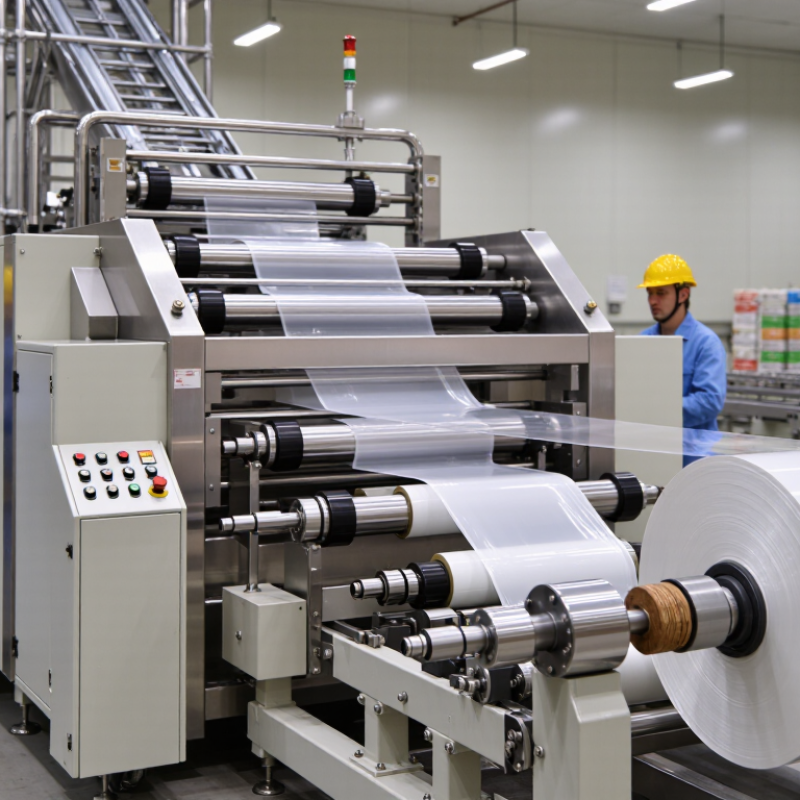
7 Tips for Choosing a Hot Melt Coating Machine

Understanding Hot Melt Coating Machine Types and Applications

Choosing a hot melt coating machine starts with the application, not the catalog photograph.

Grand View Research estimated the global hot melt adhesives market at about USD 9.4 billion in 2023. Its forecast indicates continued growth through 2030. That demand covers packaging, labels, hygiene products, furniture, and technical laminates.

Choose slot-die coating for precise, continuous adhesive layers. Select roll coating when viscosity and web contact need flexible adjustment. Consider spray systems for uneven surfaces or breathable substrates.

Match the machine with the adhesive’s viscosity, melting temperature, and open time. Check web width, coating speed, heating zones, and cooling capacity. Control matters. A small temperature drift can create streaks or weak bonds.

Inspect cleaning access and adhesive-change procedures before purchase. Ask for coating-weight tests using your actual film, paper, foil, or nonwoven material. Review energy use, waste rates, and operator safety controls.

Smithers’ The Future of Global Flexible Packaging to 2029 identifies lightweight structures and material efficiency as important market directions. This makes accurate coating more valuable, especially in thin laminates.

I would not trust a machine tested only with an easy substrate. We once overlooked edge buildup during evaluation. The final trial exposed it. Test the edges. Keep waste visible. A faster machine is not automatically better if it produces unstable bonds, blocked nozzles, or excessive trim waste.

Evaluating Material Compatibility and Coating Performance

7 Tips for Choosing a Hot Melt Coating Machine

Evaluating Material Compatibility and Coating Performance

Choosing a hot melt coating machine starts with the adhesive, not the machine frame. Check the material’s melting range, viscosity, open time, and thermal stability. A machine should maintain steady heat without damaging sensitive components. Test it first. Place a small adhesive sample in the proposed system and observe flow, stringing, and residue.

Match the coating method to the material and product surface. Slot dies can provide accurate layers, while roll systems may suit broader, textured substrates. Check whether the machine handles your target coat weight at the required line speed.

Measure twice. Small changes in temperature can alter viscosity and coating thickness. I have seen a smooth trial fail when production speed increased. That gap deserves attention.

Evaluate performance with practical tests, including peel strength, surface coverage, edge definition, and cooling behavior. Inspect coated samples under consistent lighting. Record coat weight across the web, not only at the center. Confirm that pumps, hoses, nozzles, and seals tolerate the adhesive’s operating temperature. Also review cleaning access and changeover time. These details affect reliability more than attractive specifications. A first test may look perfect, yet aging, humidity, or substrate dust can expose weaknesses later. Leave room for another trial.

Comparing Production Speed, Width, and Temperature Control

7 Tips for Choosing a Hot Melt Coating Machine

Production speed should match the adhesive’s melting and coating behavior. A higher line speed can increase output, but it may reduce coating uniformity. During trials, inspect the web under bright light. Look for thin edges, streaks, or small bubbles. Those details often reveal problems before they become expensive.

Tip: Compare speed using real production materials, not only empty-machine demonstrations. Record start-up time, steady running speed, and cleaning time. A machine rated for high speed may perform differently with thicker adhesive layers. I have seen operators focus too much on maximum speed. That was not always useful.

Web width affects waste, stability, and future capacity. Select a coating head that supports your current width while allowing reasonable expansion. Temperature control matters just as much. Independent heating zones can help maintain consistent adhesive viscosity across the coating area. Check the displayed temperature against an external measurement during testing. Readouts can be slightly misleading.

Tip: Test narrow and wide rolls. Observe edge control, coating weight, and temperature recovery after brief stops. A small temperature drop may create visible defects. Precise control is valuable, but it cannot fix poor material preparation. Keep a written trial record, including room temperature, adhesive batch, speed, and coating thickness. Honest records make later decisions more reliable.

7 Tips for Choosing a Hot Melt Coating Machine

Comparing production speed, coating width, and temperature control across typical machine configurations.

The chart compares representative non-brand machine configurations using common industrial specifications. Higher production speed and wider web capacity improve throughput, while a lower temperature deviation indicates tighter adhesive control.

  1. Match line speed with your required production volume.
  2. Choose a coating width that fits your widest substrate.
  3. Check temperature stability for consistent adhesive viscosity.
  4. Confirm compatibility with the selected hot melt adhesive.
  5. Evaluate coating-head adjustment and changeover time.
  6. Consider energy use, maintenance access, and operator safety.
  7. Allow sufficient capacity for future production expansion.

Checking Automation, Maintenance, Safety, and Energy Efficiency

7 Tips for Choosing a Hot Melt Coating Machine

Tip 1: Check automation carefully.

A reliable control system should regulate temperature, coating speed, adhesive flow, and web tension. Operators need clear alarms and simple adjustments.

Tip 2: Examine data access.

Production records can reveal uneven coating, waste, and temperature drift. I prefer systems that show trends, not only current readings.

Tip 3: Inspect maintenance access.

Heating zones, pumps, filters, and coating heads should be reachable without dismantling half the machine.

Tip 4: Ask about cleaning time and spare parts.

Small delays can become costly during continuous production. I once underestimated filter replacement time. That mistake affected an entire shift.

Tip 5: Treat safety features as essential.

Look for guarded hot surfaces, emergency stops, pressure relief, and clear warning signals.

Tip 6: Review energy efficiency.

Insulated heating areas, accurate temperature control, and standby modes can reduce unnecessary power use. The lowest purchase price may not be the lowest operating cost.

Tip 7: Test the machine with your actual adhesive and substrate.

Observe start-up behavior, coating uniformity, fumes, and operator workload. Do not rely only on a brochure. A trial may expose problems early. I would also measure warm-up time and adhesive consumption, because estimates are often optimistic. Safety documentation and operator training should be practical, current, and easy to verify.

Assessing Supplier Support, Total Cost, and Long-Term Value

7 Tips for Choosing a Hot Melt Coating Machine

Assessing Supplier Support, Total Cost, and Long-Term Value

Choosing a hot melt coating machine involves more than comparing prices. Ask the supplier to demonstrate performance on your actual substrate, not a polished sample. Check coat-weight stability, edge control, start-up time, and adhesive temperature. Request a written response-time policy, spare-parts list, and technician availability. Test it live. A supplier that explains limitations earns more trust than one promising perfect output. Confirm operator training, installation guidance, remote diagnostics, and documentation in your working language. These details reduce avoidable downtime during the first production month.

Compare total cost, not purchase price. Include heaters, pumps, nozzles, filters, electricity, ventilation, maintenance labor, waste, and planned upgrades. Ask for realistic consumption data at your target speed. A cheap machine can become expensive when cleaning takes two hours every shift. Calculate cost per coated meter over three to five years. Include downtime assumptions. They will be imperfect, but visible assumptions make the comparison honest. Check whether parts are standard and locally obtainable. Long lead times can stop a line for a surprisingly small component.

Long-term value also depends on process flexibility. Assess compatible adhesive viscosities, coating widths, speed range, and future automation options. Review service records from similar installations without requesting confidential details. Ask how software updates, safety checks, and calibration are handled after the warranty. A factory visit may reveal practical weaknesses, such as messy hose routing or poor labeling. Do not ignore operator feedback. They notice heat, noise, and cleaning effort before spreadsheets do. One overlooked issue can reshape the payback calculation.

7 Tips for Choosing a Hot Melt Coating Machine - Assessing Supplier Support, Total Cost, and Long-Term Value

Tip Evaluation Dimension Practical Benchmark or Data Point What to Verify Long-Term Value
1. Match the Machine to the Coating Process Coating width, line speed, coating weight, and adhesive type Select a working range that covers current production and at least 20% future capacity. Typical hot melt coating lines may operate from approximately 5 to 100 m/min, depending on the application. Ask for coating trials using the actual substrate, adhesive, target coat weight, and production speed. Confirm whether the machine supports the required adhesive viscosity and temperature range. Reduces product defects, avoids premature replacement, and provides room for new products.
2. Check Coating Accuracy and Process Stability Coat-weight uniformity, temperature control, tension control, and web handling A practical acceptance target is coat-weight variation within approximately ±3% to ±5%, subject to the adhesive, substrate, and measurement method. Review test reports for cross-web and machine-direction consistency. Confirm thermocouple accuracy, closed-loop controls, automatic tension regulation, and defect-monitoring functions. Improves material yield, bonding consistency, customer acceptance, and compliance with internal quality specifications.
3. Evaluate Supplier Technical Support Installation, commissioning, training, troubleshooting, and spare-parts response A strong service agreement should define remote-response targets, such as same-business-day acknowledgement, and on-site support availability within 24–72 hours where regional coverage permits. Request a written support scope, technician qualifications, training hours, escalation process, spare-parts stocking plan, and warranty exclusions. Shortens downtime, improves operator capability, and lowers dependence on a single specialist.
4. Calculate Total Cost of Ownership Purchase price, installation, utilities, consumables, labor, maintenance, and downtime Use a 5- to 10-year cost model. Include electrical consumption, compressed air, adhesive waste, replacement parts, software or service fees, and planned production interruptions. Compare cost per coated square meter or finished unit rather than equipment price alone. Record assumptions for operating hours, labor rates, energy prices, and annual production volume. Reveals whether a higher initial investment can deliver lower operating cost and a faster payback.
5. Review Energy Efficiency and Material Utilization Heating efficiency, standby controls, start-up waste, adhesive recovery, and cleaning requirements Prioritize independently controlled heating zones, insulated hot-melt components, automatic standby mode, and start-up scrap targets below approximately 2% to 5% where the process allows. Request measured energy data at production speed and standby. Check adhesive purge procedures, filter design, nozzle cleaning frequency, and reclaim limitations. Cuts energy use, adhesive waste, cleaning time, and environmental impact over the equipment lifecycle.
6. Confirm Safety, Compliance, and Maintainability Guarding, emergency stops, hot-surface protection, electrical safety, access, and cleaning design The machine should include documented risk assessment, clearly labeled emergency-stop circuits, interlocked guards where required, and operating instructions for hot surfaces and molten adhesive. Verify conformity with applicable local machinery, electrical, and workplace-safety requirements. Check whether routine maintenance can be completed without excessive disassembly. Reduces injury risk, unplanned shutdowns, compliance exposure, and maintenance labor.
7. Assess Upgradeability and Lifecycle Support Controls architecture, data connectivity, modular components, spare-parts availability, and product roadmap Prefer systems with standard industrial communication options, recipe storage, production data logging, replaceable modules, and a documented spare-parts support period of at least 7–10 years where available. Ask whether software updates, new coating heads, sensors, inspection systems, or additional heating zones can be added without replacing the complete line. Protects the investment, supports automation initiatives, and extends useful equipment life.

Note: Benchmark ranges are indicative planning values. Final acceptance criteria should be agreed through application testing, technical specifications, and site-specific safety requirements.