How to Choose the Right Jib Crane for Your Needs?
Choosing a Jib Crane starts with the lift, not the catalogue. What is the heaviest load, how far must it travel, and how much clear floor space remains beneath the boom? These details shape the crane’s capacity, reach, rotation, mounting, and hoist choice. A compact wall-mounted model may free valuable floor area, while a freestanding unit needs a suitable foundation. Small site differences matter.
MHI and Deloitte’s 2024 Annual Industry Report surveyed more than 1,000 manufacturing and supply-chain professionals, highlighting continuing pressure to improve operational efficiency. That broader industry finding is not a jib-crane specification, but it explains why careful equipment selection matters. For technical guidance, compare the intended duty and installation conditions with the manufacturer’s rated capacity and applicable ASME B30.11 requirements. As lifting-equipment engineer Dr. Chris McKinnon advises, “Choose the crane for the lift you actually perform—not the one you imagine.” Treat that as a practical reminder, not a substitute for engineering review.
Before you choose, map the load’s path on the floor. Check column spacing, headroom, reach, rotation, power supply, and the supporting structure. A 500-pound load handled repeatedly may demand a different duty rating from the same load lifted occasionally. Don’t overlook awkward loads, either. Their shape can change the rigging and the safe working radius. The perfect crane on paper may not fit the bay. Verify measurements, ask the supplier for documented ratings, and have a qualified professional review structural and installation details. One missed dimension can mean costly rework.

Define the Lift: Include Load, Rigging, Hook Block, and Required Lift Height
Before comparing jib cranes, define the complete suspended load. Add the product, sling, spreader beam, lifting attachments, and any other below-hook gear.
A 900-pound machine with 80 pounds of rigging is a 980-pound lift, not a 900-pound one. Confirm how the crane’s rated capacity treats the hoist and hook block; designs differ, and double-counting or omitting their weight can distort your selection.
Use the heaviest planned load, not the average. Leave room for realistic variation.
Then measure the required hook height from the floor to the highest point the hook must reach. Check headroom above the load, sling length, and the extra height needed to clear nearby equipment.
A crane may meet the weight requirement but still fail the lift. ASME B30.11 provides guidance for monorails and underhung cranes, while the crane supplier should confirm the applicable capacity and configuration.
The U.S. Bureau of Labor Statistics counted 5,283 fatal work injuries across all industries in its 2023 Census of Fatal Occupational Injuries; that figure is not crane-specific, but careful lift planning remains essential.
Small details are easy to miss. Recheck the actual rigging list before finalizing the capacity.
Map the Work Area: Wall-Mounted Jibs Typically Rotate 180°, Freestanding Jibs 360°
How to Choose the Right Jib Crane for Your Needs?
Map the work area before comparing crane capacities. Mark the load’s pickup point, travel path, and set-down location on a simple floor plan. Include benches, doorways, columns, and places where workers need clear access. A crane’s reach may look sufficient on paper, yet a nearby shelf can block the hook’s path. Measure twice. The usable work zone matters more than the widest possible rotation.
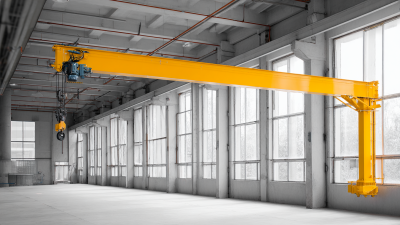
Wall-mounted jib cranes typically rotate 180°, making them practical when a wall or column borders the lifting area. Their sweep can serve a workstation without occupying floor space, but the mounting structure must safely support the crane and its loads. Freestanding jibs typically rotate 360°, so they can serve a broader area, provided the base and surrounding floor space allow it. Leave room for the boom, suspended load, and operator. That detail is easy to miss. Actual rotation and clearance depend on the crane design and installation.
Tips: Sketch the boom’s sweep, then check it against real obstacles. Note where the load might swing, especially near corners or walkways. If the work pattern changes during a shift, map both positions; a layout that seems obvious at first can still leave a blind spot.
How to Choose the Right Jib Crane for Your Needs? — Map the Work Area: Wall-Mounted Jibs Typically Rotate 180°, Freestanding Jibs 360°
| Jib Crane Type |
Typical Rotation |
Approximate Work-Area Shape |
Mounting and Space Needs |
Often Suited To |
Key Planning Check |
| Wall-mounted jib |
Typically up to 180°, depending on design and installation. |
A partial circle or semicircular area beside the supporting wall or column. |
Attaches to a suitable building column or wall structure; keeps the floor below the jib clear of a freestanding mast. |
Serving a workstation, machine, or production area positioned alongside a structurally suitable support. |
Confirm that the support structure can handle the crane loads and that the boom clears walls, equipment, and other obstructions. |
| Freestanding jib |
Typically up to 360°, depending on design and installation. |
A circular area around the mast, subject to obstructions and operating limits. |
Uses a floor-mounted mast and foundation or engineered base; requires floor space and a suitable supporting slab or foundation. |
Work areas needing load access from several directions or where a suitable wall or column is unavailable. |
Check foundation and floor requirements, nearby equipment, and whether the full rotation path can remain clear. |
| Wall-travelling jib |
The boom typically swings around its mounting point; travel along the runway extends its service area. |
A series of partial-circle work areas along a wall or elevated runway. |
Requires a compatible runway and building support; the runway occupies space along the structure. |
Serving multiple workstations arranged along a production line or building wall. |
Map both the boom’s swing path and the runway travel limits, including end stops and obstructions. |
Planning note: Rotation angles are typical configurations, not universal specifications. Actual rotation, reach, capacity, and usable coverage depend on the crane design, mounting arrangement, load, and site conditions. Verify the equipment specifications and structural requirements for the intended installation.
Compare Rated Capacity: Many Catalog Jibs Offer ¼- to 5-Ton Models
Catalog jib cranes commonly span ¼ to 5 tons, but that range is only a starting point. Match the rated capacity to the heaviest load, including slings, hooks, and attachments. Small loads matter. A 1-ton machine may still be unsuitable if the load sits far out on the boom, where reach and structural limits affect performance.
Check the load chart for the exact boom length and working radius. Confirm whether the crane must rotate through a full circle, serve multiple stations, or handle frequent lifts. The support structure matters too: a wall-mounted jib transfers forces into the building, while a freestanding unit depends on its foundation. ASME B30.11 provides industry guidance for monorails and underhung cranes; confirm which requirements apply to the specific jib design and installation.
Capacity choices have real safety stakes, though injury data do not isolate jib cranes. The U.S. Bureau of Labor Statistics reported 738 fatal work injuries involving contact with objects and equipment in 2022. That broad category is not a jib-crane risk estimate, but it underscores the need for careful load handling. Compare the rated capacity with actual operating conditions, and ask the supplier to verify the configuration. A catalog number cannot account for every awkward lift. It is easy to overlook that.
Select the Mounting Type: Match Floor, Wall, or Column Support to Site Conditions
Mounting type should follow the building, not just the crane’s rated capacity. A floor-mounted jib suits open bays and offers an independent support, but its foundation and anchors must resist operating forces. Check slab thickness, reinforcement, cracks, and nearby pits before choosing this option. A typical floor slab may not be strong enough. The U.S. Bureau of Labor Statistics recorded 5,283 fatal work injuries in 2023. That figure is not specific to cranes, but it underlines why lifting-area hazards deserve careful review.
A wall-mounted jib can preserve floor space and keep aisles clear. Its reach depends on wall strength, bracket spacing, and the load path into the building structure. Column-mounted designs can work well where a suitable column already stands near the work zone, but never assume a building column can carry crane loads. Ask a qualified engineer to verify it. Measure the actual sweep, including the hook, suspended load, and nearby lights or pipes. One overlooked obstruction can limit the crane’s usefulness. Site drawings help, but they may miss later changes. Check the structure in person, then match mounting type, capacity, reach, and duty cycle to the real work.
Specify Hoist and Duty Rating, Then Verify Clearances and Structural Loads
Choosing a jib crane starts with the hoist, not just the rated capacity. Match the hoist’s lifting speed, lift height, and control style to the work. A low ceiling may require a compact hoist with reduced headroom. Check the hook’s approach to the mast and the far end of the boom. Small details matter.
Duty rating deserves equal attention. Estimate lifts per hour, average load, and operating hours per shift. A crane that lifts a light component repeatedly may need a different duty rating from one that moves a heavier load occasionally. Do not size from the heaviest lift alone. That shortcut can overlook wear from frequent starts, stops, and rotation. Keep a written estimate; actual use may differ.
Verify clearances with the crane’s full operating area in mind. Include the load, slings, hook block, nearby doors, lights, and equipment. Measure the boom’s reach and rotation before choosing a mounting position. Then have a qualified engineer check structural loads, including the crane’s reactions at its supports and the loads transferred into the building. A wall or column that looks substantial may still need reinforcement. Measure twice. If drawings are incomplete, that uncertainty should be resolved before installation, not guessed away.