What Are the Top Forklift Jib Boom Types for Buyers?
Choosing the right forklift jib boom begins with the load, not the product photo. A Forklift Jib Boom can extend a truck’s handling range for pipes, coils, machinery, and suspended equipment. However, each design changes reach, capacity, visibility, and operating stability. Buyers need more than a longer attachment.
This guide examines the main boom types available for forklift use. Fixed-length jibs offer straightforward handling and fewer adjustment points. Telescopic jibs provide variable reach for tasks with changing distances. Adjustable or multi-position models can support different lifting angles and load locations. Fork-mounted jibs are often practical for occasional jobs, while dedicated attachments may suit frequent, demanding operations. Each option has strengths. None is perfect.
Real warehouse conditions can expose weaknesses quickly. A telescopic boom may improve flexibility but reduce capacity at full extension. A compact jib may fit narrow aisles but limit working height. The attachment’s weight also reduces the forklift’s available lifting capacity. That detail is easy to overlook. Buyers should compare rated capacity, load center, boom length, mounting method, and locking features against the forklift manufacturer’s specifications. They should also consider how operators will see the load during movement.
Reliable selection depends on verified data, trained operators, and regular inspections. Check welds, pins, hooks, warning labels, and visible deformation before use. Never treat a manufacturer’s maximum rating as a universal operating target. Site conditions, load shape, and uneven surfaces can change performance. This article helps buyers ask better questions, avoid attractive but unsuitable designs, and choose a forklift jib boom with practical confidence.
Forklift Jib Boom Basics and Main Functions
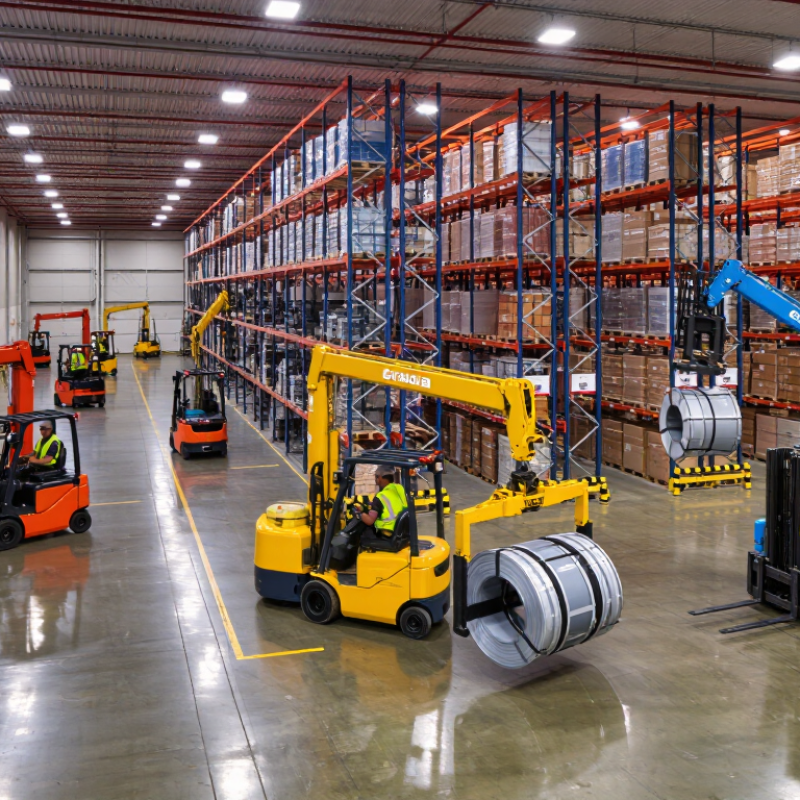
A forklift jib boom extends a truck’s reach for lifting suspended or awkward loads. It uses a hook, sling, or lifting eye instead of standard forks. Fixed jibs suit repeated lifts at one reach. Telescopic jibs provide adjustable outreach. Articulating models can position loads around obstacles. Fork-mounted jibs offer quick installation, but they may shift if not secured correctly.
According to OSHA’s powered industrial truck guidance, forklifts cause about 85 fatal accidents and 34,900 serious injuries annually in the United States. OSHA also links roughly 25% of forklift accidents to inadequate training. These figures cover forklifts generally, not jib attachments. That distinction matters. A jib changes the load center, reduces practical capacity, and can increase forward tipping forces. Operators must read the attachment rating, load chart, and truck capacity plate together.
The main function is controlled horizontal reach. A telescopic boom can place a steel coil inside a trailer. A fixed boom may lift a machine part from a pallet. Before lifting, keep the boom low, center the load, and inspect hooks, pins, welds, and locking devices. OSHA 29 CFR 1910.178 requires written approval for attachments that affect capacity or safe operation. It also requires updated capacity markings. Selection is not always obvious. A longer boom may look more useful, yet it can create a smaller safe load. Real work conditions can expose that mistake quickly.
Fixed Jib Booms for Simple Lifting Tasks
Fixed jib booms suit straightforward lifting tasks where reach remains predictable. They attach to a forklift carriage and provide a rigid lifting point. This design has fewer moving parts than telescopic alternatives. That simplicity can reduce inspection time and operator confusion.
A warehouse may use a fixed boom to position machine parts, pipes, or maintenance equipment. The operator sees the hook location clearly, especially in narrow aisles. However, the rated forklift capacity does not automatically apply to the boom. The attachment changes the load center and can reduce safe lifting capacity. OSHA reports about 85 forklift-related workplace deaths and 34,900 serious injuries annually in the United States. That figure makes load charts and trained operation more than paperwork. They are practical controls. Buyers should verify the attachment’s rated capacity, mounting method, hook height, and compatibility with the specific truck. A fixed boom is not always the best choice. That assumption deserves questioning.
Tips: Check the real load center, not only the package weight. Measure the hook position with the boom installed. Keep suspended loads low, centered, and stable during travel. OSHA’s Powered Industrial Trucks guidance also recommends following manufacturer instructions and inspecting attachments before use. In practice, a visible weld or loose retaining pin should stop the task immediately. Record the inspection. Small omissions become expensive lessons.
| Fixed Jib Boom Type | Typical Reach | Typical Rated Capacity* | Load-Handling Method | Best-Suited Tasks | Main Advantages | Important Limitations |
|---|---|---|---|---|---|---|
| Short Single-Hook Fixed Jib | Approximately 1.0–1.8 m | 500–2,000 kg | One fixed hook positioned at the end of a rigid boom | Moving dies, machinery parts, motor assemblies, and compact suspended loads | Simple design, good visibility, short load center, and fast installation | Limited horizontal reach and generally unsuitable for loads that require precise placement at multiple distances |
| Long Single-Hook Fixed Jib | Approximately 1.8–3.0 m | 400–1,500 kg | One fixed hook at an extended boom tip | Reaching into trailers, placing loads over barriers, and handling items away from the forklift | Provides greater working reach without a powered extension mechanism | Longer reach increases the load moment; the allowable capacity can be substantially lower than the forklift’s rated capacity |
| Fixed Two-Point Jib | Approximately 1.2–2.4 m | 500–2,500 kg | Two fixed hooks or lifting points for different load positions | Handling loads with two attachment locations or choosing between near and far pickup points | Offers basic positioning flexibility while retaining a rigid, low-maintenance structure | Requires careful load balancing; both hooks must be used only within the attachment and capacity limits specified by the manufacturer |
| Fork-Pocket Fixed Jib | Approximately 1.0–2.5 m | 500–3,000 kg | Rigid boom secured to the forklift forks through fork pockets, heel restraints, or a retaining chain | Occasional lifting jobs, maintenance work, and operations where a dedicated attachment is not permanently installed | Quick to mount, portable between compatible forklifts, and practical for intermittent use | Correct fork engagement and mechanical restraint are essential; the attachment may shift if it is not secured properly |
| Carriage-Mounted Fixed Jib | Approximately 1.2–2.5 m | 1,000–4,000 kg | Rigidly mounted to the forklift carriage or attachment interface | Frequent lifting of molds, coils, equipment, and other suspended loads in production areas | More secure connection, improved repeatability, and better suitability for regular-duty applications | Usually requires compatible carriage mounting and may reduce visibility or increase attachment weight |
| Fixed Low-Profile Jib | Approximately 0.8–1.6 m | 500–2,000 kg | Short rigid boom with a low hook position designed for compact working areas | Indoor maintenance, machine-room lifting, and operations with restricted overhead clearance | Compact footprint, improved maneuverability, and reduced interference with overhead structures | Short reach limits placement options, and the hook height may not suit tall pallets or elevated loads |
| *Capacity figures are representative industry ranges for fixed jib configurations, not universal ratings. The actual allowable load depends on boom reach, hook position, attachment weight, forklift capacity plate, load center, mast configuration, floor conditions, and the attachment manufacturer’s data. Always use the lowest applicable rated capacity and follow local lifting regulations. | ||||||
Adjustable Jib Booms for Flexible Load Handling
What Are the Top Forklift Jib Boom Types for Buyers?
Adjustable Jib Booms for Flexible Load Handling
Adjustable jib booms suit warehouses handling different load lengths, heights, and pickup points. Their telescopic sections extend reach without changing the forklift attachment. A locking pin or hydraulic adjustment then secures the selected position. Shorter settings improve control near the mast. Extended settings help reach pallets, machinery, or vessels beyond the fork tips.
Telescopic and pivoting jib booms are common adjustable options. Telescopic models change horizontal reach. Pivoting models change the lifting angle and improve positioning around obstructions. Some designs combine both functions, but complexity increases inspection demands. Keep it practical. A longer boom can reduce rated capacity sharply. Buyers should check the forklift’s attachment rating, load-centre chart, and boom capacity at every extension setting.
OSHA reports about 85 annual forklift fatalities and 34,900 serious injuries linked to powered industrial trucks. That data makes load control more than a purchasing detail. Operators should inspect welds, hooks, locking devices, and visible deformation before each shift. The UK Health and Safety Executive also stresses competent operators, stable loads, and planned lifting areas in lift-truck guidance. Those controls remain important when using adjustable booms.
A useful buyer test is simple: place a representative load at minimum and maximum reach. Record sway, visibility, clearance, and stopping response. Do not rely only on catalog capacity. Real conditions differ. Weather, uneven floors, and awkward load shapes can expose weaknesses that specifications miss. Sources: OSHA Powered Industrial Trucks safety data; UK HSE lift-truck safety guidance.
Telescopic Jib Booms for Extended Reach
Telescopic jib booms help forklifts place loads beyond the normal fork reach. Their sliding sections can extend into trucks, storage racks, and recessed work areas. This extra distance is useful when the load sits behind an obstacle. It also changes the forklift’s balance. The farther the boom extends, the less lifting capacity usually remains. Buyers should treat reach as a working requirement, not a headline feature.
In practical selection, compare the boom’s rated capacity at every extension position. A load chart should show limits for retracted, partly extended, and fully extended use. Check the load’s weight, shape, center of gravity, and attachment points. A long beam may look manageable but create unexpected leverage. Measure twice. A simple reach calculation can still mislead if the load swings or shifts during placement.
Choose a boom with secure locking pins, visible markings, and smooth hydraulic movement when adjustment is needed. Inspect welds, hooks, retaining hardware, and wear areas before regular operation. The attachment must match the forklift’s rated capacity and mounting system. Training also matters, because slow travel and level positioning reduce sudden movement. I would not assume the longest boom is the best choice. In real workplaces, excessive reach can reduce control and leave useful capacity unused.
How to Choose the Right Forklift Jib Boom Type
Choosing the right forklift jib boom starts with the work, not the price. A fixed jib boom suits repeated lifting at one known reach. It is simple, stable, and often easier to inspect. A telescopic jib boom offers adjustable reach for loads placed at different distances. However, extending the boom reduces available lifting capacity. A rotating or articulated type can improve positioning in tight areas, but it demands more operator control.
Check the forklift’s rated capacity, attachment points, and load center before comparing models. The boom must fit securely and remain compatible with the forklift’s load chart. Measure your typical lifting height and reach. Then consider load shape, hook position, floor conditions, and available space. A long boom may look useful, yet it can create unnecessary leverage. That mistake is easy to make. Experienced operators also inspect pins, welds, hooks, locking devices, and visible deformation before each shift.
Tips: Choose the shortest reach that completes the task safely. Confirm capacity at the boom’s maximum extension, not only its base position. Keep loads balanced and below the approved working limit. Use clear hand signals in busy areas. Follow the manufacturer’s instructions and local safety requirements. A trial fit can reveal problems that measurements miss. Review the choice with a qualified supervisor, especially when loads vary.
Top Forklift Jib Boom Types: Typical Reach Comparison
Telescopic jib booms generally provide the greatest reach and flexibility, while fixed-length booms offer a simpler and more economical solution. Adjustable booms provide a practical balance for operations that handle loads at different distances. The ranges shown are representative industry values; always confirm the rated capacity, load center, attachment compatibility, and operating angle using the forklift and jib boom load charts before selection.
Related Posts
-
Top Benefits of Using Forklift Jib for Material Handling?
-
7 Compelling Reasons to Invest in Wall Mounted Jib Cranes for Enhanced Operational Efficiency
-
Navigating Challenges in Sourcing the Best Portable Gantry Crane: Key Issues and Industry Insights
-
How to Choose the Right Jib Crane for Your Needs?
-
Creative Uses for Portable Cranes in Various Industries
-
Understanding Overhead Gantry Crane Operations and Safety Tips for Modern Industries